Showing posts with label Covid-19. Show all posts

Sunday, 27 September 2020

The Body Remembers


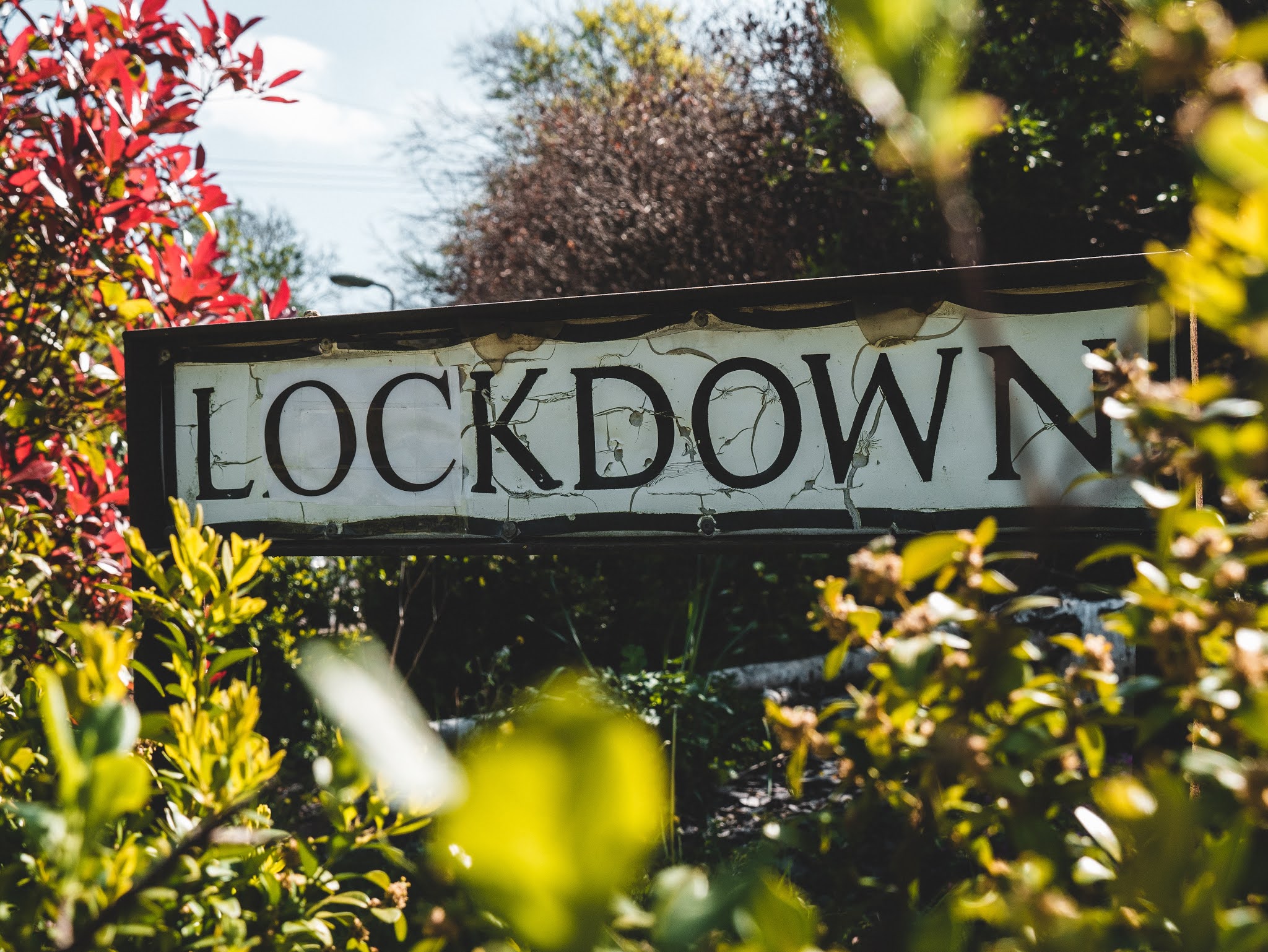
How are you feeling about facing a new lockdown? It seems as though we might be heading that way even if we're still at the "bespoke" stage.


Personally, I’m concerned. As a counsellor and, I hope, a caring member of society, I am worried about what emotional damage another lockdown would do to us. Will it really save us from this pernicious virus? Is it even right?


We are living in traumatic times. Babette Rothschild’s definitive book: The Body Remembers tells us that experiences of trauma can remain as a body memory long after the reality has faded. My fear is that those in charge have not given much thought how this trauma may affect its citizens of the future. 


I'd like to share a personal story which explains my views.


For almost two years, I have been a devoted carer to a small child. I visited once a week as a family member until she was nine months old and then took over her care for two full days a week while her parents worked. 

The arrangement came to an end in December of last year (to the relief of my body, at least) when she went to nursery full-time but I still collected and delivered and she came to my house so the steady, loving relationship continued.

Until March 23 of this year and lockdown when the relationship was abruptly severed and FaceTime became the “new norm”, a far-from-normal two-dimensional substitute. 


She was puzzled; I was upset but we persevered. She enjoyed pressing the red button at the end and was fairly overanxious to use it. She wasn’t speaking so we were limited to my chatting and waving and her waving hesitantly back until she became distracted elsewhere. It was unsatisfying but better than nothing. This went on for five weeks.


Then came Barnard Castle and the trip by the elusive Dominic Cummings when everything changed. I decided, like many others, if he could interpret the rules in his favour, so could I. The child's father finally agreed that I could come and see her and take her for a walk as long as we were outside the house. That was okay by me. It was Spring and I could do with the exercise. It was agreed I would do that twice a week.

Now for the interesting part. 


I drove over, parked the car outside the house and dropped off two bags of flour (remember the days when everyone was trying to bake and there was no flour around? I found a secret supplier) and went to drive off to park the car round the corner. By chance, I looked up and there was my little girl standing at her bedroom window looking out at me with a slightly puzzled gaze. She put her lovely chubby hand towards the window and hesitantly waved. I waved back with greater enthusiasm and then opened the door to get into the car. She continued to wave and then started to blow kisses. I drove off.


Some minutes later, I saw her in her full three-dimensional glory before she saw me. She was in her pushchair happily babbling to her father without a care in the world. 


Her father stopped walking and she looked around with some surprise. Then she saw me and there was a slow dawning recognition as she gave a joyful gasp. This little person who is usually quite reserved and, at that time, hard to coax a smile from, was so overjoyed at our reunion that she tried to scramble out of the buggy and fling her arms round my neck. It was a wonderful moment for both of us.


Her father left us (socially distanced at all times) and we reverted to our easy one-to-one relationship. When it was time to go, her father met us and walked back with me to my car. As I said goodbye, she began screaming and tried again to get out of the buggy. I was distraught, too, but kept my screaming to myself.

This pattern continued for some weeks and there were difficulties, though not with me. She was desperate for the swings, saying: "Peeese" in the hope that, if she asked nicely enough, I'd open the gate. I explained but she didn't understand of course. When the gate was officially opened, she was hesitant, holding back, uncertain about other children and the greater expanse of play area. 

We settled down and, later, I was “allowed” inside the house because restrictions had been lifted and the social bubble extended. (As I write this, I am astonished that phrases such as social distancing and social bubbles seem so ordinary. However did that happen?). The baby and I resume our relationship and I go over at least once a week to help out. 


If the lockdown is tightened, I will still be all right, as will she. I have “carer” status so there will be no more exclusions for me. But what about everyone else. How will they - you - and your loved ones fare?


FaceTime, Zoom and other computer meet-ups can be useful and are good at times of need. But nothing beats real human contact. Three-dimensional life matters.


By: Lulu Sinclair

Photo 1 by Rod Long on Unsplash

Photo 3 by Ben Garratt on Unsplash

Tuesday, 4 August 2020

Masking Up


How are you getting on with wearing a mask? Are you glad to be doing your bit for society and hoping that you’re helping to contain this awful illness?  Are you pragmatic? Do you wear it because you have to? Are you railing inside, feeling it’s an infringement of your own rights? Or have you decided to give up on going out and doing anything that requires wearing such a facial covering?


There are other options available to this question but it’s curious that we are having to discuss it at all. Who would have thought, even as late as March when lockdown started, that it would be made compulsory for all of us to wear masks when we are out and about?


A newspaper recently carried a cartoon of a man wearing a face mask, saying: “I’d never had imagined the time would come when I’d cover my face, walk into a bank and demand money.”


I find that funny but I also find the situation very, very odd. Our Western identity is very much wrapped up in baring our face. We are suspicious of those who conceal - or are concealed - behind a mask. If we can’t “read” a person, how can we know who they are?


We have characters in history to learn from, good and bad. For bad, think highwaymen, pirates, masked thieves stealing away in the night with swag bags over their shoulders. The Man in the Iron Mask is an in-between figure: feared because of his demeanour but trapped and controlled by his disguise. Inside was a man who had done no harm to anyone, locked up inside a mask simply because of who he was. Darkness and masks, there’s a theme there.


Good masked characters are available, in case you are beginning to feel bleak. Among the superheroes are Batman and Robin, Spiderman, the Lone Ranger and even Cat Woman, though she did have a devilish streak.


What they all had in common, however, was a desire to disguise who they really were. Whatever their role, these characters did not want their true selves revealed. The masks set them apart.


The difference for us is that we are having a mask imposed on us, whether we like it or not. Earlier in the lockdown, we were told they were unnecessary so we have to adjust our thinking from “not doing any good” to “wear a mask to avoid killing your fellow human beings”. I’m exaggerating of course but that, I would say, is the gist of the message. Whether we like it or not, we no longer have a choice. Mask up or stay at home.


For those of us who choose to go out, how will you wear your mask and what sort will it be? Will you ease it casually under your chin at first sign of open air, or will it stay firmly in place, metaphorically glued to your mouth and nose so that you obey the rules and limit the risk of infection? There you are, you are telling us a lot about yourself, even without saying a word.


You might decide to follow the style of trendy celebrities and “influencers” who are making a feature of their masks, designing ones to match their outfits. Mask as statement: a clever idea. 


But what about we who wear them out of necessity, not accessory? We who go for the functional white-backed blue paper-type that the NHS hands out. They are not pretty to look at but they serve a purpose. Unless you wear glasses, then your breath tends to steam up the glasses, making it both hard to breath and see. It’s not a good look, and it makes shopping difficult.


Once out and masked up, there is the question of how we behave. I have been observing, and notice a mask does make a difference. Often, it is an extension of a person’s personality. If they are timid, they may become more timid - keeping their distance, hand up to face perhaps in a bid to ward off evil illnesses or unwanted attention. Conversely, a mask may allow a more confident soul to spread (usually a) himself further physically.


At the beginning of lockdown when only brave or desperate people ventured out and masks were still a rarity, I spotted a heavily shielded man pushing forward to get what he wanted from the shelves while tutting loudly at others who were also trying to get their food needs met. The irony was that he was coughing and spluttering too. I wanted to point this out to him but lost my nerve as he glared my way. It was a learning moment and, after three months of observing, I get the sense that a mask will bring out the extreme of a wearer, good or bad. 


The lesson I'm taking is that I - a person who does not like wearing a face cover - need to adapt as best I can. If I am going to be forced to wear a mask for some time, I need to accept it with good grace and try to remember I am still on show, even if a part of me feels hidden. I should not use it as an excuse to behave "badly" or in a way I might not, if fully uncovered.


If we really want to be supportive of each other, maybe we need to work to ensure masks don’t bring out the worst in us. Maybe, instead, we could use our eyes - the “windows to our souls” after all - to signal that we wish our fellow travellers all the very best. 


By Lulu Sinclair


Photo 1: Colin D on Unsplash  

Photo 2: Alex Motoc on Unsplash  


Friday, 29 May 2020

Being Here


How are you and how are you getting on? Are you enjoying the respite of quiet contemplation or are you longing to get out there again?

Have you been filling your lockdown time with Zoom meetings (and did you know much about them before the middle of March) with office folk and Zoom after-hours parties with your friends?

Or have you been catching up on your reading and delving, as one friend has, into Biblical matters. She tells me she is not particularly religious but is curious about history. Did I know for example that Jesus Christ spoke only Aramaic therefore he would not have said: “This is my body … this is my blood” because his language consisted only of pronoun and noun - no verb. His words, translated from Greek, would therefore always have been open to interpretation.

Wow! Who'd have thought it? My friend cannot say her lockdown has been wasted. What an extraordinary use of time! She will not forget what she was up to during this time.

Zoom works well for many
And that led me to a little of my own reflection. What is going on for us in lockdown? Are we willing the period away in frustration and fury, feeling trapped and angry that time is passing and that there is so much to do and so little time to do it?

Or are we taking this as an opportunity to really think about ourselves, and what is going on for us within ourselves? Are we looking at our lives and feeling happy and content with what we have or are we feeling it may be time for a change and considering what that change may be?
I suppose, much of it comes down to whether you are a “do-er” or a “be-er”. The word “be-er” does not seem to exist (except in its alcoholic form and that’s a whole different discussion) so what does that say?

“I’m a doer”, I may say, proud that I achieve things and get things done. Society understands that and I can imagine I will be applauded for my achievements.

Conversely, what does it mean to say: “I’m a be-er”? Would anyone but me even understand it? Probably not.

I have another friend - how lucky am I to have two such thoughtful friends - who is an academic and spends quite some time being quiet and reflective. She takes that role very seriously and, if ever challenged for being so occupied and not taking part in the lively hustle and bustle around, she will say: “I reflect. That is what I am paid for.”

Personally, I have tried to do a bit of both. To escape the everyday world, I read. I find it easy to immerse myself in whatever adventures I am reading about - relationships, comedy, espionage. I have also, to my amazement, travelled the world cruising with Jane McDonald. Whoever would have thought Channel 5 would come up trumps at this time?

Off to hug a tree
In real life, I have been lucky enough to spend time outside with a small child, watching the world through her eyes. We walk through woods - she hugging trees without being told to and ditching her red boots so she can feel the earth under those tiny feet - all the while keeping our distance from those others who are themselves using this time to connect with our world.

Occasionally, my little friend will do something she is particularly proud of and clap her hands together as she laughs and says: “Well done.” She knows what she likes and what is good for her. I could - and will - learn from her.

There is so much talk about mental health issues - maybe, sometimes, just a bit too much? - so how beneficial it might be if we were to use this time to “clear” our heads of unhelpful or hindering thoughts and feelings and to replace them with positive plans for the future.

Our lives are generally busy and the one thing many of us do not have enough of is time; time to stay still, reflect and feel. However, at this moment, we have time to look at and reflect on what life means to us. What makes us feel good and what does not - and is that something we can change?


How refreshing it might be if, just for now, we could forget about our plans for tomorrow and instead get on with the pleasure and enjoyment of life simply by “being”. 

This one-off experience is not going to last for much longer. Let's try to make the most of it.


By: Lulu Sinclair


Thursday, 7 May 2020

Following the Leader


“Now is not the time for soundbites … I feel the hand of history on my shoulder.”

That quote actually belongs to Tony Blair but it could work well for our present PM, Boris Johnson.

What a time he has had of it. He survived a near-miss with Covid-19 and then, in the same month, became the father of a baby boy who looks to have inherited those strong Johnson genes. Our PM has stamina and he is clearly going to need it.

Back to the quote. 

Boris Johnson and his band of merry men are facing their moment of history. How Boris is perceived and how he manages it will all depend on what happens now. 

Time for the PM to take a lead
Currently, I have my concerns. The Government started off with an extraordinary majority given to them by those who sought Brexit. An unimaginable 80 seats. The future held such promise.

And then along came Covid-19, a new and unknown virus from which thousands of people have died within a very short space of time.

First, the no-blame game. It was not our government’s fault about Covid-19. We have big cities with diverse groups of people, most of whom live in close proximity so, when it happened, it was bound to have a calamitous effect on the population. Even though some said the UK should have been shut down more quickly, there can be no certainty that was the right thing to do. Government ministers, particularly Boris, were very conflicted about what to do and took a while to lockdown - lockup? - Britain. 

To ministers' surprise, the people accepted the decision with ease. Fear can have that effect and all of us were very quickly made to feel very, very frightened.

The problem, as I see it, comes after that. I observed a terror of ministers running around like headless chickens. They seemed to be locked in their own forever “frozen” stage of fear where the alternative fight or flight reflex did not get a look in. “Stay at home! Protect the (it soon became ‘our’) NHS! Save lives!” The mantra was repeated so often it became a cliché and, instead of appreciating the message, I began to feel irritated. 

In my last blog, I wrote that we as a society needed to have a rational head during the present situation.

More than six weeks after lockdown first began, I fear the Government has abandoned all pretence of rationality and is a living breathing example of when blind panic goes bad. Where gut reaction leads, reason gets elbowed aside.

An example of that is being forced to stay indoors to protect the NHS because it couldn’t cope with a pandemic. (Why not? I have to ask, a lot of money is spent on it).  Putting cynicism aside, I am prepared to do as I am told. But I also wonder why, while I am locked up, millions of people have been allowed to travel into this country and less than 500 of them were checked for Covid-19 symptoms on entry. Where is the logic in that?

My problem is, I am adult by age and a rebel by inclination. I am also, as many human beings are, a mass of contradictions. As an adult, if you reason with me and explain, I will be inclined to obey.  Talk to me in the right way and you will have no trouble from me.

Surfing suddenly seems tempting
However, tell me I MUST do something - and maybe get a little shoutie (from the Minister of Health school of governing) - and my rebellious side is right back at you. Before you know it, I'm planning a trip to Cornwall to ride the Newquay surf - something I’ve never thought of doing before. I sense I am not alone.

Better therefore, to treat the population as adults and address them accordingly. You are likely to get adult behaviour back, responsive and responsible and what may be needed to help contain this terrible and contagious virus. 

So why then, do I feel I’m being told what to do by a group of unknowing arrogant prefects who want to get on and are using me as a punchbag to achieve their aims. It does not bring out the best in a person.

Talking of arrogance, if you want people to comply, you need to lead from the front. It is no good telling everyone to do one thing when you and your cohorts are doing another. If you tell me to keep my distance and then go around shaking hands with everyone, I am going to get a confused message. Similarly, if a scientific guru and the architect of lockdown tells me it is a matter of life and death that I stay at home, I am prepared to trust his judgment. But when I discover he has been breaking his own rules, I am inclined to wonder what else I have been told to do that is wrong. And while isolation may be good for my physical wellbeing - although we are not entirely sure of that either - my mental health does not enjoy being separated from my loved ones. 

I hope that one day we will look back at this as if it were a bad dream but we still have a way to go. For now, we need encouraging and thoughtful leadership to give us confidence as we travel along this bumpy road. 

We are told Boris Johnson has wanted this job for a very long time. Now is his moment. I want his decisions to make me feel safe and I want to believe there is more to him than an optimistic soundbite. I’m not yet feeling it.


By Lulu Sinclair


Photo 2 Ben Shread/Cabinet Office 
Photo 3 Harry Brewer on Unsplash

Sunday, 19 April 2020

Lockdown and the Power of Persuasion


Currently, we are facing another three weeks of lockdown, possibly even longer. So it feels ever more important to look at the way this situation is being presented in order to work out the best possible outcome.   

We hear evidence that social distancing is effective in controlling the spread of Covid-19 and that we may even be over the very worst of the death tolls.

And yet the unrelenting deprivation of lockdown for so many people may be extremely hard to sustain.

It feels to me like a tinder box which, if not handled very carefully, could conflate to bring about a very unwelcome outcome.

A recent headline in The Times read: "Public being treated like children in lockdown situation." Many of us feel that, from the outset and after a shaky start, the Government's approach has been to order and instruct. Adults used to running their own lives and making their own choices are not comfortable being put back into childhood roles.  

Decision makers have categorised people into groups that show no appreciation of the wide disparity of individual situations within such groups, as well as seemingly ignoring those who may not have a home to stay in or those whose homes are far from a safe refuge.
Generations of families are being kept apart
We have witnessed an exponential rise in domestic abuse since the lockdown, and for those already suffering from depressive conditions and addictions, being isolated in your own space can quickly lead to acute loneliness, self-harm and despair.  

Old people in care homes, deprived of family visits, can so easily lose the will to live. On the other hand, there are many people aged 70+ who are as fit - or even fitter - than their younger colleagues (look at Captain Tom, for example, the Army veteran who has lapped his garden over 100 times at the age of 99). Purely because of their age, these people have been pensioned off and made to feel like pariahs if they venture out at all.   

We even have the ridiculous situation of the NHS now having to beg people to come into hospital for their critical care treatments, such has been the fear brought about by the Stay At Home: Protect our NHS messages. 

We have heard many examples of the heavy-handedness of the police in challenging people's reasons for being outside, but this approach has also led to the very destructive process of neighbours policing each other and social media groups being set up to monitor  the activities of others.  

This is extremely divisive at a time when, above all, we need to be pulling together in our communities and as citizens, not just of the UK, but of the world.  

I believe this could have been avoided if there had been more focus on the "how" and not just the "what" of the incessant messages with which we are being bombarded. Those messages have been delivered in a way that is so sombre and threatening that it is difficult not to feel like a naughty child who doesn't really understand the situation - and certainly can't be trusted!

Ministers need to explain, not threaten

Research into working with resistance has demonstrated that, to be effective, it is necessary to be able to persuade the person that change is in their best interest and is motivational in over-riding the current behaviour.  

No one ever made a sufferer from anorexia start eating healthily again by threats – not even the very real one of death - and recovery in these situations is reached  by offering alternative lifelines which break through the fear that has created the resistance in the first place.  

We are living in a climate of fear and uncertainty and are receiving threats and orders on a daily basis with very little empathy and understanding about the hardships we all are experiencing. And, meanwhile, there are no positive suggestions about how to better manage the situation the government has imposed on us. 

This is a very demanding time for us all, but it doesn't have to be a wasted one.

There ARE ways to mitigate against even the most acute distress and the first and most important one of these has to acknowledge its existence.

I worry that ministers are those who are guiding them are not sufficiently aware of the psychological impact of this lockdown. And, because of that, I the tinder box could soon ignite.

If that happens, the consequential damage could be very long term.   


Photo by iMattSmart on Unsplash
Photo 2 by Rod Long on Unsplash
Photo 3 by helloimnik on Unsplash         


Sunday, 5 April 2020

The Best of Us ... The Worst of Us


“It was the age of wisdom; it was the age of foolishness.” The opening lines from A Tale of Two Cities, written by Charles Dickens in 1859, sound a strikingly familiar chord today.  
We have made extraordinary advances in science and technology but, at the same time, we have ruthlessly used and abused our environment, and we now find ourselves exposed to a global threat over which we have, as yet, no control.  

This has led an unprecedented level of fear at a universal level, and the way we respond to that fear will be critical in how well we survive the corona virus pandemic.

Charles Darwin’s theories of evolution and the survival of the fittest have been interpreted by some as every man for himself.  But in fact, if we look at animals in the wild, and what we now know about the way trees communicate with each other, it is evident that survival is about looking after your community (the herd or the woodland) and that individuals are significantly more at risk if they act independently of each other and do not collaborate with their tribes.  

Those who have emptied the shelves of supermarkets to stockpile for themselves are at risk of setting up a self-fulfilling prophecy, as they not only create the very shortage that they are anxious to avoid, but are also still vulnerable to contracting the virus and may have unwittingly deprived themselves of the very people they will need to look after them.  

There is a fundamental difference between a survival gene and a selfish gene, and unless we can all recognise and respect that we need to collaborate in order to survive, I believe we will exponentially increase our chances of causing our own destruction.  

While we have now been given strict orders from the Government as to how we should behave, specifically focused on what we should not do, I feel there has been little support or advice with regard to the mental health aspect of this epidemic. 

For those people with pre-existing psychological disorders  such as depression, addiction, anxiety etc, being isolated can feel very risky and, in some cases, is actively dangerous. 

The instruction to limit activity and freedom that the Government had to issue was not one that anyone wanted to hear, and it was predictable that there would be a wide range of reactions, ranging from denial to outright panic.  

Covid 19 is creating universal trauma
It threatened us all with being forced to radically change our normality on a daily basis while, at the same time, giving us no certainty of an outcome over which we had no control.  

These are conditions that are very difficult to manage and they needed to be presented in a way that understood that fear would be likely to provoke resistance. Uncertainty and lack of control creates an immediate need for structure and support. 

I believe it would have been helpful for a Government minister to have offered strategies to be put in place to help people manage on a daily basis. For example, it would be useful to explain how to maintain structure in our daily lives; (regular meal times, etc.); how to use the time that we are at home in a constructive way - learning a new skill, exploring new ways of contacting people and perhaps revisiting old friendships. 

Failure to give advice in these areas has left many people without direction or purpose and has provoked anger and rebellion among some and, in others, impotent despair. 

Fortunately, we have also seen very positive examples of people showing compassion and collaboration in supporting and reaching out to each together when, for the first time ever, we experience trauma on a universal basis.

This is a time, I believe, to take stock of our own choices and priorities and to question some of our decisions so that, going forward, we can perhaps, lead our lives in a way that is less driven by short term gain. 

We could also understand and show more awareness of the consequences of our behaviour so that, in the longer term, we can better care for the environment we live in. By doing that, we can learn to take better care of ourselves.