Sunday, 12 January 2020

We Need To Talk About Meghan


In case anyone’s missed it, the Duke and Duchess of Sussex are planning to step back from their roles as “senior” – their quotes, not mine – royals, separate from THE Royal Family and try to become financially independent. 

They plan to divide their time between the UK and North America and to campaign to raise awareness for good causes close to their hearts.

It would be a very unkind person who would not wish them well.

Unfortunately, that’s not quite all. 

The couple intend to keep their HRH titles, Frogmore Cottage (a pretty big house for such a small name) and, certainly for the present, a fair portion of their income that derives from the Duke’s position within the royal family. So, as the media has widely reported, they seem to want to have their cake and eat it.

I’m going to concentrate on Meghan because, before their getting together, Harry hadn’t publicly expressed any such desire. Indeed, he’d seemed to have moved from his youthful devil-may-care attitude to grown-up mode and gained a new respect from the public, who had always loved him, despite his naughty ways. He was very much part of the group and seemed to be happy with that role.

Back to Meghan. It was all so promising only a little over two years ago, the prince had got his girl and she was gorgeous. There may have been private critics, but I think the country’s feeling was overwhelmingly of good will. There’s talk now of racism, but I didn’t see any evidence of it. We live in a fairly multi-cultural society and I didn’t hear a single interviewee ever remark unasked on Meghan’s mixed-race background. She, on the other hand, referred to it a number of times. If there was any prejudice, I’m inclined to think it might have been because she was American and, as the quote goes, the US and Great Britain are two nations divided by a common language. 

It must have been hard for Meghan to arrive in a country where women married to important men are preferred to be seen rather than heard. She’s known to be opinionated, intelligent, tough and glamorous. She’s also able to cut loose when it suits her, former friends have said. In psychological terms, the ability to remove ourselves completely from those we have been close to could suggest a worryingly cut-off inner world.

Assuming Meghan’s motivation was love, she uprooted, left friends and relatives and agreed to completely change her life for love of Harry. How has it all gone wrong so quickly? 

Meghan was once quoted as saying she knew nothing about the royal family; friends dispute this and say she had a passionate interest in them, particularly Princess Diana. 
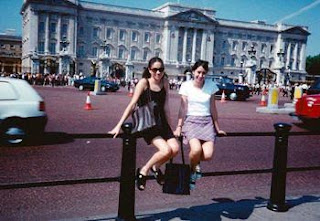
Meghan, aged 15, outside Buckingham Palace
It is possible, however, that Meghan had no idea how the monarchy worked. She may have thought she would be allowed to air her views and quickly discovered, or was told, that she could not. Perhaps she felt disappointed, frustrated and stultified.

The royals and their courtiers seem to have tried their best to help with her transition, including allowing the couple to have a six-week holiday break in the same year she’d taken maternity leave. But she expressed her unhappiness – as did Harry. After their holiday, the couple returned home without their baby. That seems unusual to me. If she intended to go straight back, why was the trip described as a holiday? 

So is it possible that nothing was ever going to be enough for Meghan?  

Here's a thought. As a counsellor, what would I say to a client with traumatic loss in his background who tells me he’s met someone with whom they want to spend the rest of their life. This person understands them completely, truly feels their pain and they, too, suffered trauma in their early life. My client feels whole with this person and my client has found the role he was searching for: a white knight and protector to his new love. I can see his self-esteem has soared. 

Over time, I hear about a few problems. His beloved started off being very charming with his family and very keen to be part of it. Now she doesn’t like the family and doesn’t attend family functions. The prospective partner no longer likes the job my client does, particularly as it involves other family members. The partner is obsessively secretive about certain aspects of her  – and my client’s – life and insists my client is “on-side” with that, even though part of the deal and financial perks of being a family member is that there is some public desire to know about my client’s immediate family life, including any children. He has done all he can to please her but now his beloved is talking about moving back to her country of origin and wants him to go with her, lock stock and barrel, while insisting that my client negotiates to retain major perks from his former work and family life. 

My client is too loved up to recognise the signs. I do and I worry.

By Lulu Sinclair


Top pic by Mark Jones - https://www.flickr.com

Saturday, 4 January 2020

Resolving The Resolutions

New year. New hopes. New resolutions.

Most of us make them, even if we don’t declare them out loud. There’s something about a new collective start that brings this inner determination to do something afresh.

I read the following in a newsletter from London-based Lidgates, organic butcher to the discerning.

“Babylonians made promises to their gods at the start of each year that they would return borrowed objects and pay their debts.

“The Romans began each year by making promises to the god Janus, for whom the month of January is named.
“In the Medieval era, the knights took the "Peacock Vow" at the end of the Christmas season each year to re-affirm their commitment to chivalry.

“This tradition has many other religious parallels. During Judaism's New Year, Rosh Hashanah, through the High Holidays and culminating in Yom Kippur (the Day of Atonement), one is to reflect upon one's wrongdoings over the year and both seek and offer forgiveness.” 

So there we have it, religious or otherwise, this is the time of year when we feel a deep inclination to do better.

I want to give a slight word of warning here. If you’re going to make one or two, keep them achievable. 
“I’m going to go to the gym; I’m going to lose two stone; I’m going to stop drinking.” 

These ideas sound fine when you’re full, fatigued, over-partied and bloated and completely dehydrated through drink. 

They may seem less appealing one week later when you’ve got post-Christmas blues and it’s dark, dreary and cold outside. The urge to reach out and eat, drink and – dare I say it? –  even smoke, may become irresistible.

And then, instead of feeling that sense of pleasure in yourself that you’ve taken charge of whatever it was you felt needed a bit more help, you’re left (if you’re as hard on yourself as I can be) feeling a failure, and all within a week of the new year. 

If that’s the case, what hope is there for the next 51 weeks?

May I make a suggestion? Avoid the absolute. 

I’ll use those three examples above but it’s applicable to any situation. Instead of: “I’m going to …” how about “I’m going to try to/I’m going to work towards …?” 

That leaves you room for manoeuvre. If you slip up, you don’t have to turn on yourself in fury or disappointment and then attack what it was you were giving up with renewed vigour. 

The “trying to” approach is kinder and less punishing internally which means you’re more likely to get where you’re planning to go. 

Otherwise, you’re in danger instead of meeting that immediate and devilish resistance that suddenly appears to be determined to put you off your stride. For example: “I’m not going to eat that biscuit” turns into an internal dialogue with a voice that says: “Oh yes you are, why shouldn’t you? And why would you want to stop at just the one?”

This idea of course isn't just about what a person takes in from outside. It can be applied to behaviour too. Less of the setting yourself up to fail with the determined “I will” and more of the understanding “I’ll try”. 

It’s about not just being kinder to others, but kinder within yourself too. You might find it quite effective.

Happy new year!


By: Lulu Sinclair


Photo 1 by Ayo Ogunseinde on Unsplash
Photo 2 by Zera Li on Unsplash


Sunday, 15 December 2019

Time To Travel Hopefully

So that’s it. It’s over. A general election – effectively a second referendum without actually naming the “R” word – and Brexit, whether we like it or not.

I’m not going to talk about that last part; opinion is probably still sharply divided. What I am going to say is I’m glad a democratic decision has at last been made. 

My relief is based on mental health grounds alone. The UK has had more than three years of anxiety around the subject and wondering what happens next and it’s not been good for most of us.

A study published in the BMJ of US trainee doctors has found they are not only stressed out by their training but also by what’s going on politically. As the shenanigans of their political masters are aired more publicly than they used to be, the fallout spreads further, across and down. 

I’m relieved a long-term study has found this because it’s always good to have evidential backup to what starts off as a gut feeling.

Here in the UK, until the recent past, we were used to grumbling politely about whatever was bothering us but for a short time and within a very confined space. We weren’t constant protesters – remember the march against the war in Iraq and how astonished everyone was that up to a million people had taken to the streets to express their views – and, mostly, we got on with our lives. That, I would suggest, is “normal” behaviour which allows us to live a reasonably healthy life.

How different we are now! Politically engaged, ranting on Twitter, not speaking to friends and families who disagree with us and generally behaving in a very un-British way. We surprised everyone – even our European friends and neighbours who thought we were stiff upper-lipped, pragmatic and not inclined to public argument. How we shocked them and how, probably, we shocked ourselves!

I don’t think it was the decision that caused the problem, it was what happened afterwards and that is what we have been left with for more than three years. 

And that is what changed on Thursday.

Again, this is not a personal political view. It is my professional observation on what happened.

Those who had changed their voting habits to enable such a huge change in the voting demographics were interviewed after they voted. They explained why they had done.

They sounded thoughtful, considerate and concerned. Some sounded pained and hurt, acknowledging that their own family values were being questioned at a fundamental level. I heard men and women saying how their father and/or grandfather “would be turning in their grave at what I’ve done”. None took his or her decision lightly.

The victor, PM Boris Johnson, acknowledged that when he spoke of voters “lending” him their votes. He knows he has to persuade them they did the right thing; otherwise, they’ll take their votes back again. 

So I suggest now is the time to celebrate the end of indecision. I remember being given advice by a doctor when I had no idea what to do with a particularly important decision I needed to consider in my personal life. “Do nothing,” he said. “And something will happen to make up your mind.”

When I wailed that I didn’t like uncertainly, he was kindly amused. “Nobody does. That’s the problem with humans. And that’s why we so often make an impetuous decision that is not right for us in the long term. We can’t bear to live with uncertainty.”

My uncertainty caused me enough grief. But it was my own problem. These past three years of uncertainty over our future as UK citizens have, however, been an enormous collective strain. The stress, seeming to stretch never endingly in front of us, became unbearable. 

We look to leaders to bear our anxiety for us, feeling we have chosen the right people to make the right choices for us as a collective group. Leaders are chosen to bear our burden and, for right or wrong reasons, they haven’t been in a position to do so. And it’s caused nationwide stress, discontent and unhappiness for much of the population.

And now it’s over. Now perhaps we can get back to enjoying the dullness of a mundane life. 

That’s what I’m looking for at any rate. I have no idea how it’s going to pan out but I’m hoping there’ll be someone out there among our political leaders with enough intelligence and skill to get us out of this mess. I’m an optimist and still believe politicians of all persuasions are trying their best on our behalf, even if we sometimes consider they are failing, or their views don’t fit with ours. 

I’m making my own decision. I’m going to free my mind from its post-2016 angst and hand back the reins of national decision-making to the newly elected politicians. Let’s hope they take care of me.


Photo by Shane Rounce on Unsplash


Sunday, 24 November 2019

Going Offline To Check Online Spending

We’re entering the year’s prime-time spending period with shops and online outlets doing their best to persuade us to buy anything and everything, whether we want it or not.

There’s nothing new about this. We are part of a capitalist world that depends on people spending their hard-earned cash on items they may soon decide they don’t want. The UK’s economy is built on that premise, which may be a bit worrying if people one day decide they’ll stop spending.

We’re not at that stage yet. Indeed, some psychiatrists are suggesting that a bit of a control might be needed, at least as far as internet shopping is concerned where, according to research published in Comprehensive Psychiatry, some people are seeking treatment for compulsive shopping online.

The research of 122 people who are seeking help for such an addiction indicates, researchers say, that about 5% of adults in the Western world – or 2.5m people – are compulsive online shoppers. Psychiatrists say there’s an argument such shopping behaviour could be classed as a mental health condition or labelled as “buying-shopping disorder” (BSD).

Currently, BSD comes under the category of “other specified impulse control disorder” which takes in online gambling, video addiction and other internet-linked compulsions but the authors of the paper say it needs its own separate mental health condition so that it can be considered for serious treatment by professionals, including the NHS.

Problems connected with online shopping are slowly coming into public awareness. Amazon has announced it will turn down customers who buy and then return too many products. I was surprised at that news because I thought the point about buying online was that the shopper could decide the product was unsuitable for whatever reason.

However, further reading of Amazon’s reasons disclosed that some people get a kick out of buying and receiving their package. That is, in fact, their enjoyment. They don’t want the product for itself, they want the product for the feeling it gives them.

So, what is that all about? Again, we’re not talking about people who shop online for a product, buy it and use it, we’re talking about using online shopping as a way of subjugating our inner feelings of distress – we shop to put the lid on such feelings. The problem is that, after the process is completed, we’re back with our original uncomfortable feelings, possibly even worse so after being compounded by our spending.

At some point or other, most of us look for something to distract us from uncomfortable feelings but, the researchers say, the compulsive online shopper’s habit is linked to a higher level of anxiety and depression than offline sufferers due to the internet’s increased “availability, anonymity, accessibility and affordability”. In other words, if you have an addiction problem, it’s all too easy to feed it through online buying.

Underlying conditions such as anxiety and depression are best helped through talking therapy. Identifying the cause(s) and bringing it/them out into the open through our own awareness sometimes with the aid of a professional counsellor is a life-enhancing experience, even allowing for the bumps along the treatment road.

But it takes time and, meanwhile, if the addiction is to be contained in some way, I’d suggest looking at the six stages encompassed within Gestalt therapy’s cycle of experience. It’s a good way for a therapist to understand what may be going on with the compulsive online shopper and also for the addicted person to consider what may be driving them into a pattern of behaviour that is not at all beneficial for them.

The cycle starts with a “sensation”, a feeling or desire within the self. The person (shopper in this case) then has an “awareness” of the sensation which leads to “excitement”, creating an energy to do something about the situation. Next comes the “action” – look online, check out the products, see what you like, reach for credit card/PayPal details and ping, press that button!

After “action” comes “contact”, the reward for what you’ve done. You’ve ordered a parcel, it’s arrived. You unpack it, check it, make sure it’s what you want and experience the pleasure you’re feeling at your gain. From there, the idea is that you move on to the final “withdrawal” stage when you pause and give yourself some time to enjoy what you’ve done –researched, bought, received and enjoyed your purchase. The withdrawal stage is crucial. It allows you to absorb and feel the whole experience and to process it fully.

This is a cycle we work through all the time, although we’re unlikely to be aware of it. Maybe we need to consider its value. It's useful not only to appreciate the “now” moment of our pleasures but as a way of containing some of our not-so-worthwhile habits, in an almost counter-intuitive way. 

For instance, put the list of actions and their meanings somewhere readable near the computer. If the temptation to shop arises, return to your list and reflect on what’s going on inside. Go through all the stages slowly, thoughtfully and paying real attention.

Before pressing the “go” button, ask yourself if what you’re doing is going to make you happier long term.

If yes, press that button. If there’s even a hesitation before answering, think again.  


Photo by freestocks.org on Unsplash
Photo by rupixen.com on Unsplash


Sunday, 10 November 2019

Breaking Bad ... Habits


It’s recently been announced that the handling of mobile phones in cars is to be banned. The idea is that smart roadside cameras will be able to zone in to drivers who simply touch their phones and the drivers will be in for an instant fine – no excuses to be accepted.

It would be hard to argue with that decision. The problem is that it should be been declared to use a mobile phone in a vehicle when mobile phones were first introduced. The question was raised but the PM of the time – Tony Blair – said he didn’t see a need for such a measure.

Now, more than 20 years on, mobile phones are not just a useful accessory, they have become part of our being. We are told by researchers that children are “addicted” to them and spend up to three hours a day on such devices (I’m imagining the researchers are talking about social media use on tablets and computers as well as mobiles) so that certainly can be classed as a habit. Fortunately, children have not yet become drivers.

But, wait a minute, anyone who drives around a big city – let’s take London for example – can see that adults have the habit too. Stuck in traffic, a driver can often be spotted looking down. S/he may be reading a magazine, but it doesn’t seem too likely. There’s the quick eye movement and downward gaze, then the upward glance to check the traffic, then down again and, maybe, a slight movement of the hand as they put together a quick text. It’s barely noticeable but if you’ve ever done it yourself, you’ll know the signs.

Now, after the recent ruling, anyone caught anywhere near their phone while driving is going to be in trouble – so how to break the habit? 

Like all habits we want to discard, it’s easier not to go there in the first place. Smoking, excessive drinking, over-eating, drugs, sex addiction – we all know it would have been better if we’d never started. But we are where we are and the mobile in the car habit is one that has to go.

A habit is difficult to break because it’s something that creeps up on us, that we’ve grown comfortable with and now enjoy. While we know it may not be good for us for any number of reasons, the feeling that we get from that same habit makes it difficult to let go. Mark Twain once explained he found it easy to give up smoking because, he said, he’d done it many times before.

In the case of the mobile phone and driving, this isn’t something we can “hide in plain sight”. Twain didn’t have high-definition cameras ready to catch him out and face a hefty fine if he carried on puffing.  

We live in a fast-moving world and many of us see it as a badge of honour that we can multi-task – dealing with emails, messages, texts whatever – while on the go. We’re used to operating a quick response policy, it shows that we’re efficient and on message; any time, any place, anywhere. 
Also, we may be afraid of missing out, one of the new challenges of the 21st century. Something might be happening somewhere that we discover about too late and we are left out. How alarming might that be!

Usually, habits take some time to change and there may be a couple of false starts before we achieve our aim. 

Unfortunately, with the mobile, we need to change that habit pretty smartly so, in this case, I’d suggest it’s time to take a step back and wonder what all this frenetic activity and thought is all about. Is it really us or is it manufactured by the world outside to make “us” feel the need to use every second of our waking day productively? Maybe all this freneticism is contributing to the imbalance those of us who live in the developed world are increasingly experiencing.

How about using a car journey as a way of being absolutely present and in the moment? Start off by imagining the experience of every action of your journey, starting from unlocking the car door and making yourself comfortable in the driver’s seat. Imagine what comes after turning on the ignition (you’ll probably have forgotten because we go into our own automatic pilot if we’ve been driving a while) and take it from there. 

When you’ve taken one or two test drives in your head, turn your mobile off and go out and do it for real, this time noticing everything around you, including how you feel without the comfort blanket of the mobile at your side. It could be difficult at first, maybe a bit of a sense of anxiety with that niggling feeling of having left something behind. But, in the end, after a few more stop-starts and kangaroo hops on the road, and a little perseverance, you’ll wonder why you ever thought you couldn’t do without it. 

The next step – after a time spent reflecting on and enjoying how your achievement – is to try the same method with any other habit you feel has outlived its usefulness. Good luck. All is possible.

(Clearly, this blog is not for people who do not and have never used mobiles when driving. That is the exemplary standard to which we should all have aspired. It’s for those who have aspired, and missed, but know now this is the only way to travel. Both hands on the wheel, looking ahead observantly and ready to enjoy the journey – with no noisy distractions to put you off.)


By Lulu Sinclair 

Photo 1 by Damir Kopezhanov on Unsplash


Wednesday, 23 October 2019

It's All About Trust


Discussions about “safe spaces” have become wider over the past two years or so.  The pros and cons of what they are and whether or not they should be available have been taken up enthusiastically in the media. 


Young adults, from students upwards, talk about “not feeling safe” and the conversation continues. At the extreme end of the conversation, some university students try to ban visiting contributors or lecturers who might want to discuss a different point of view. The argument, from the lobbyists, runs that the audience may feel “threatened” or “unsafe”, therefore any discussion should be curtailed. It could be seen as a way of blocking dissent. It seems effective.

Older adults may seem a little bemused by the idea of a “safe space”, wondering how anyone could imagine there is somewhere out there that is just such a place. 

As a counsellor, I understand the point of a safe space (I'm going to put the quotation marks to one side for the moment). I hadn’t heard of the expression until I went to college but it made sense straight away. 

Imagine a client comes to see a therapist because they want to talk about something involving their innermost feelings. It’s an awkward situation; they want to talk but they don’t know what to say or they are worried about being judged. Or it may be that they have little experience of listening therapy and do not know what they "can" or "cannot" say. That’s a worry on top of the worry that is bringing them to see a therapist.

One way a counsellor can help them to understand the process is to explain that the counselling room is a “safe space” ie what goes on in the counselling room stays in the counselling room. In other words – and taking into account legal and ethical requirements – what the client says to the counsellor will go no further. That means the client has a “safe space” to speak. And, hopefully from that, the therapeutic process can bring its own healing into practice.  

So, while I understand the safe space from a therapeutic point of view, I wonder if there’s been a bit of confusion between “safety” and “trust”.

In order to talk freely, we have to trust that the person listening to us is a person we can feel safe talking to – confidentiality is key. And we have to feel that that same person has knowledge, wisdom and a desire to do the best for us. In other words: Is this person trustworthy and can I trust them to look after my best interests?

Is it possible that the increasing calls for safe spaces within society are more about being able to trust those in authority over us, rather than a place where we can hide and be protected from the outside world?

Here in the UK, we have the chaos surrounding Brexit which seems to be having a powerful effect on all us, regardless of what outcome we want. Our leaders are locked in a bizarre dance about which we can do nothing. They are trapped and many of us watch on appalled as the “grown-ups” demonstrate they’re not really very grown up at all. They seem to have taken on the mantle of squabbling children and it’s really not what we’re used to. 

Then we have what’s going on outside the UK – the US’s ever-changing foreign policy, the suffering and fighting in the Middle East, global climate change and natural disasters – it’s hard to find a way round what could easily become catastrophic thinking. No wonder the younger members of society see threats everywhere.

Someone I know with a legal background has a specialist interest in parking tickets. After years of studying the law on this particular subject, the person discovered a parking company was acting unlawfully. They used their knowledge to help people appeal their tickets – and win –and eventually wrote to the Department of Transport to explain that companies working on behalf of the state were allegedly employing sub-companies that were not complying with the law. 

You’d expect – or I would – that, when given information and evidence about this, a government representative would investigate but, so far, they haven’t. That seems unfair. 

So, too, does the news that some of the people who mark our students’ exams, have been found to be marking them incorrectly. One examining body is going to have to pay out compensation for exactly this. Who would have thought you could study hard for an exam, go in, do your best and still fail because someone else was incompetent?

These are just two examples that come to mind of situations where you would expect those in authority to be looking out for people who need representation but it sadly seems as if they are not. And that might mean something is going wrong.

We learn pretty early on that life is not fair but we are also taught that those in charge of us are looking out for our best interests. When we begin to doubt such "certainties", we may become anxious. We may find ourselves questioning all sorts of beliefs we had not even thought about before. I have a hunch many of us feel those in authority are more likely to be looking after their own best interests, rather than ours.And that leaves many of us feeling unsafe. It's a strange and uncomfortable feeling, and not one that sits well with us.

I wonder if, instead of inter-generational disputes about the benefits – or not – of safe spaces, we might agree that something is not working well enough for any of us in the arena of trust. Maybe, if those in charge could begin to repair that, fewer of us would feel the need to demand so many safe spaces.

By: Lulu Sinclair

Photo by MILKOVÍ on Unsplash
Photo by Joël de Vriend on Unsplash
Photo by Marcin Nowak on Unsplash


Sunday, 6 October 2019

Concerning Climate Change And Other Global Issues

First, this is not a blog about the arguments for and against the scientific evidence of climate change.

This is a blog about the effects of the arguments for and against the scientific evidence of climate change and what it is doing to us on an individual level. Or to be even more personal, how it is affecting me.

Actually, it’s not just the climate change issue that we need to consider; it’s the pressure of life and the “dramatic” information we receive daily from one media outlet or another.

Last week, we heard that scientists tell us bacon and sausages are not as bad for us as we thought (hands up those meat-eaters among us who read the story and didn’t immediately lick their lips at the thought of a bacon sarnie?) and that’s after years of being told we should avoid processed meat at all costs. 

Then there’s sugar – what’s that doing to us? We’ve given up smoking, drinking, we exercise like mad and now we can’t have the odd treat. What are we to do?

Back to the subject of climate change. It’s a very, very big subject and it seems to be impinging on our world at an alarming rate. I’d suggest that, if it weren’t for Brexit, it would be headline news all day and every day.

What I’m worried about is how it’s making me worry. I read that the UK has committed to something or other by 2050 so, while it will cost a lot, we will have more than done our part. 

But I also understand there’s a lot of pollution coming out of China and India and, being vast countries and concerned more about their increasing population than “first-world problems” may not be as committed to climate change as “we” are. There’s another worry to worry about.

And, while I’m worrying, my young friends are even more anxious than I am, so I have to take on board their concerns too. We have children missing school to attend climate change protests. We have a 16-year-old bravely travelling the western world to tell us what we should be doing and looking very angry that we’re letting her down.

But, hold on a minute, I don’t feel I am. I recycle, turn off lights, put on an extra jumper to avoid wasting energy on heating, don’t travel much and walk when I can. I am beginning to think that I, as an individual, am doing all that I am asked. Surely that’s enough?

What I’d like to know is why I am being made to feel guilty? As psychotherapists and counsellors, we learn that we are responsible for our own actions but not others and we can’t ever “make” a client do what they don’t want to do, and it would of course be wrong to. We can bring thoughts and ideas into awareness during client-therapist sessions but it’s for our client to decide what they’re going to do about the situation. Not us. 

Why then do I feel as though I’ve been given the world’s environmental and health problems and told to sort them out? It’s as though I’m being bombarded with life-threatening meteors minute-by-minute and I don’t have time to dodge the attack, let alone work out what to do. Besides, what was “bad” yesterday may be “good” tomorrow. I can’t keep up.

Are you feeling tired by this, or slightly anxious? Me too. 

After quite a lot of self-reflection, consideration of feelings, analysis and logical thought – a bit like being the fully fledged adult I am aiming to be – I’ve decided to resist what I perhaps feel is being put on me.

I have to ask myself how much I, as one person, have the power to do and how much I actually want to do. And, through this process, it’s become easier to work out what’s “my stuff” and what is being put upon me by the outside world. 

My reflection was long; my conclusion is short. I’m doing what I can to help save the planet but I’m absorbing too much from the demands of the outside world and that’s not as it should be. 

I need to remember how to filter. I need to push back against the mass of information that is being live-streamed into my brain and I need to remember how to process it for myself so that I can regain my balance. Unless I process this huge amount of information for myself and decide what matters to me and what doesn't, I will remain unbalanced. And that's not a comfortable position to be in.  

So, rather like someone listening to a radio, I need to turn on less and tune out more. 

By: Lulu Sinclair


Photo 1 by Bob Blob on Unsplash
Photo 2 by John Cameron on Unsplash
Photo  3by Brady Bellini on Unsplash


As with all blogs, this is the personal view of the writer. Others may disagree.